

Inside the Minds of Culinary Visionaries in the realm of gastronomy, brilliance doesn’t merely reside in technique. It manifests in bold imagination, cultural fluency, and a kind of fearless curiosity that turns everyday ingredients into narrative tools. To dine on a dish created by a culinary visionary is to taste memory, geography, and philosophy—all on a single plate. But what really drives the visionary chef minds responsible for reshaping our food systems, kitchens, and expectations?
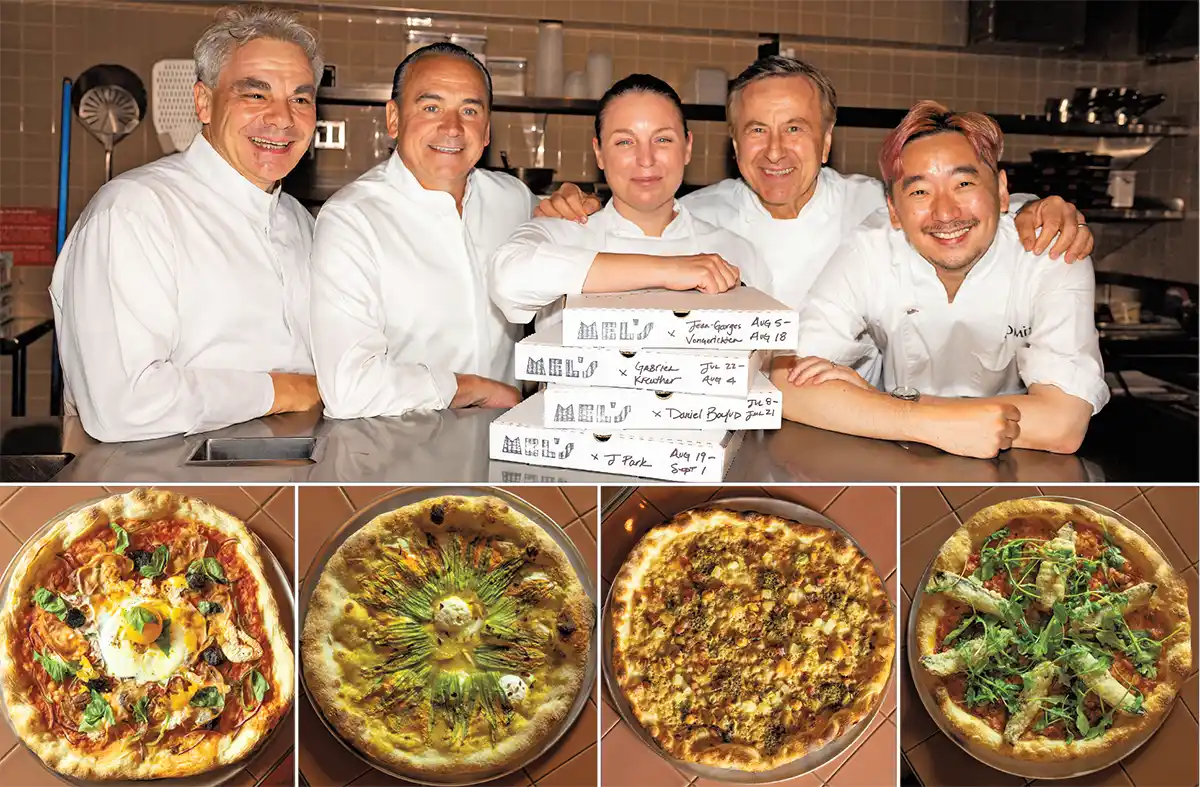
The Alchemy of Creative Instinct
Every great culinary innovator operates with more than just recipes. Their intuition guides them through layers of taste, texture, and temperature as though decoding a sensory equation. While some chefs lean heavily on tradition, others use tradition as a springboard—launching into creative stratospheres unknown to most.
The genius of these visionary chef minds often lies in their ability to see potential where others see limits. A discarded carrot top becomes a fragrant pesto. Burnt miso becomes a base note in ice cream. These aren’t accidents—they’re revelations, born from culinary instincts sharpened by years of both discipline and rebellion.
Global Palates, Local Hearts
Modern culinary innovators no longer think in terms of national boundaries. Their ingredient lists read like diplomatic treaties—yuzu, tamarind, sea buckthorn, za’atar—all collaborating in unlikely harmony. Yet despite their worldly embrace, the greatest chefs remain grounded in the intimate stories of their roots.
Consider the likes of Ana Roš in Slovenia or Virgilio Martínez in Peru. Their kitchens channel topographies and traditions, from alpine herbs to Amazonian tubers. The visionary chef minds behind these movements don’t just source locally—they interpret locally, weaving ancient knowledge with contemporary craft.
Thus, while their flavors may span continents, their intent remains deeply rooted.
Culinary Philosophy as Artistic Medium
For many top chefs, food is no longer just nourishment. It’s a medium of expression—a way to question, provoke, and even heal.
Take Massimo Bottura, who reimagined traditional Italian dishes not as preservationist exercises but as reinterpretations of memory. Or Dominique Crenn, whose poetic plating tells stories of love, grief, femininity, and French countryside. These chefs don’t just ask what should go on the plate—they ask why.
Their plates are visual essays, composed with the care of a painter’s brush or a poet’s pen. Each dish becomes a canvas of ideas. To eat it is to participate in an ephemeral piece of art. The visionary chef minds behind such culinary creations possess a rare trait: the ability to turn sensory pleasure into intellectual discourse.
Engineering with Emotion
Unlike traditional engineers who deal in steel and silicon, chefs craft ephemeral architectures. Yet the construction is no less meticulous. Balance, structure, tension, and contrast govern their plates as much as they govern skyscrapers.
But in addition to logic, emotion plays a pivotal role. These visionary chef minds consider how the crunch of a pickled lotus root might evoke nostalgia, or how the sweetness of black garlic might disarm the skeptic. It’s culinary composition driven not only by flavor maps but by emotional cartography.
And so, while the calculations behind a dish may be invisible, the impact is visceral.
Obsession with Detail
Culinary visionaries are not casual creators. They are obsessive. Everything from the angle of a microgreen garnish to the temperature of a handmade ceramic plate is carefully curated. This obsessive attention to minutiae doesn’t come from vanity—it stems from a deep-seated desire to orchestrate the diner’s entire sensory experience.
Even silence in the dining room is considered. Lighting. Scent. The pitch of silverware against porcelain. Each variable is a note in the greater symphony. And the visionary chef minds conduct it all with precision so exacting, it borders on monastic.
It’s through this relentless refinement that excellence is achieved. Not occasionally—but consistently.
Sustainability as Strategy
The modern culinary genius does not ignore responsibility. In fact, the brightest visionary chef minds today are focused on sustainability—not just in ingredients, but in systems.
Chefs like Dan Barber or Rodolfo Guzmán reimagine menus to reflect seasons, soil conditions, and environmental ethics. Meanwhile, many kitchens now operate zero-waste models, where even onion skins or fish bones are upcycled into consommés and powders.
Far from being trend-followers, these chefs are trend-setters. They redefine luxury not by scarcity or exoticism, but by integrity. For them, a tomato at its peak, harvested two hours prior, is more luxurious than imported truffles out of season.
Fusion without Confusion
True culinary visionaries understand that fusion is not a chaotic blending of styles—it’s a thoughtful confluence. When done poorly, fusion tastes disjointed and indecisive. But when it emerges from a deep understanding of multiple traditions, the result is symphonic.
Chefs like Peter Gilmore and Gaggan Anand have demonstrated how to balance Korean fermentation techniques with French sauces, or Thai aromatics with Scandinavian pickling methods. These aren’t random pairings. They’re dialogues—conversations across borders, bridged by flavor.
The success of these pairings rests entirely on the chef’s command of both traditions. Visionary chef minds don’t borrow—they translate. And in that translation lies magic.
Storytelling through Seasons
Another hallmark of genius lies in rhythm. Many modern menus shift like symphonies through the seasons. What’s served in January bears no resemblance to what’s plated in July. These temporal menus reflect more than freshness—they embody mood, light, and tempo.
A spring dish might feature floral infusions and delicate acidity, while an autumn plate might lean into earthiness, caramelization, and fire. In every instance, the visionary chef minds orchestrating these transitions are attuned not just to ingredients, but to atmosphere.
Such rhythm requires discipline and humility. The chef must yield to nature, allowing it to dictate what’s possible and what’s poetic.
Tech-Savvy Tradition
While some culinary traditionalists scoff at gadgets, today’s top innovators embrace technology not as a crutch, but as a tool. Dehydrators, immersion circulators, and sonic emulsifiers are standard in avant-garde kitchens. Yet they are never used for spectacle alone.
For example, a sous-vide turnip cooked to perfect translucence and served with a digital aroma diffuser might sound eccentric. But when done purposefully, it creates an experience that connects memory and science.
Importantly, these tools allow chefs to deconstruct and reconstruct—heightening textures, concentrating flavors, and controlling transformation with surgical precision. For visionary chef minds, technology is not the point. Experience is.
Mentorship and Culinary Legacy
Greatness is rarely achieved in isolation. Culinary visionaries understand their duty to cultivate future talent. Whether it’s through formal apprenticeships, pop-up collaborations, or experimental incubators, mentorship forms a critical part of the visionary chef’s identity.
Ferran Adrià’s elBulli was not just a restaurant; it was a school, a lab, and a cathedral of innovation. Dozens of alumni now run Michelin-starred kitchens globally, each carrying fragments of his philosophy.
The visionary chef minds behind such institutions do not guard their knowledge—they disseminate it. Because for them, legacy is not what you take with you, but what you leave behind.
Imperfection as Innovation
Strangely enough, the road to culinary greatness is often paved with mistakes. What separates the visionary from the competent is the courage to fail forward. An overcooked element, a miscalculated emulsion—these are not catastrophes. They are laboratories of learning.
In fact, many iconic dishes have emerged from improvisation under pressure. A collapsed soufflé becomes an airy mousse. A too-salty reduction is mellowed with honey and evolves into a signature glaze. The visionary chef minds know how to salvage and reframe imperfection until it glows with purpose.
Because in the high-stakes world of elite cuisine, adaptability is the true test of genius.
The Inner Landscape
Beneath the toques and stainless-steel counters lies the unseen architecture of a chef’s psyche. For most, the hours are brutal, the expectations punishing, and the margin for error razor-thin. Yet amid the pressure, some thrive—not on adrenaline, but on artistry.
These chefs think like philosophers and feel like poets. They are introverts who speak best through seasoning, and visionaries who use knives like calligraphy pens. The visionary chef minds are, at their essence, cartographers of the invisible—mapping flavor onto feeling, and texture onto time.
Their creations are fleeting, but their impact is enduring.
Inside every remarkable kitchen, there is a mind at work that sees beyond ingredients. It sees potential, narrative, symbolism, and transformation. These are not just chefs—they are architects of experience, linguists of flavor, and composers of sensation.
The visionary chef minds behind today’s most astonishing meals do more than feed us. They shift paradigms. They spark dialogue. And in doing so, they remind us that food, at its best, is not just a necessity—it is an idea worth savoring.