

Sweet Side of Global World Cuisine in every corner of the world, where cultures flourish and traditions are preserved, the realm of desserts stands as a delicious archive of stories, rituals, and artistry. These aren’t merely confections to satisfy a sugar craving—they are edible signatures of heritage and geography. From spiced delicacies in the East to buttery indulgences in the West, the sweet world treats we cherish today trace a long path through history, identity, and innovation.
Europe’s Confectionery Heritage: Layered, Rich, and Artful
Europe’s legacy in sweets is a tapestry of opulent pastries, refined cakes, and celebratory bakes. In France, the delicate tarte Tatin transforms humble apples into a caramelized crown jewel of pastry technique. Equally captivating, the macaron—with its airy shell and soft ganache—demands precision and patience, becoming a symbol of Parisian finesse.
Meanwhile, Austria boasts the Sachertorte, a dense chocolate cake filled with apricot jam and cloaked in glossy ganache. Paired with whipped cream and strong coffee, it encapsulates café culture in Vienna. Germany, not to be outdone, offers baumkuchen, a “tree cake” made by meticulously layering batter on a rotating spit. The rings resemble tree trunks, offering both visual spectacle and culinary craftsmanship.
Even in colder Scandinavian countries, desserts are central. Kanelbullar, Sweden’s spiced cinnamon buns, bring warmth in frigid months. These pastries not only taste heavenly but also evoke the comfort of fika—the Swedish art of pausing with coffee and company.
Thus, these European masterpieces showcase how sweet world treats intertwine technique with indulgence, turning every bite into a celebration of cultural elegance.
Middle Eastern and North African Sweets: Spices, Syrup, and Sophistication
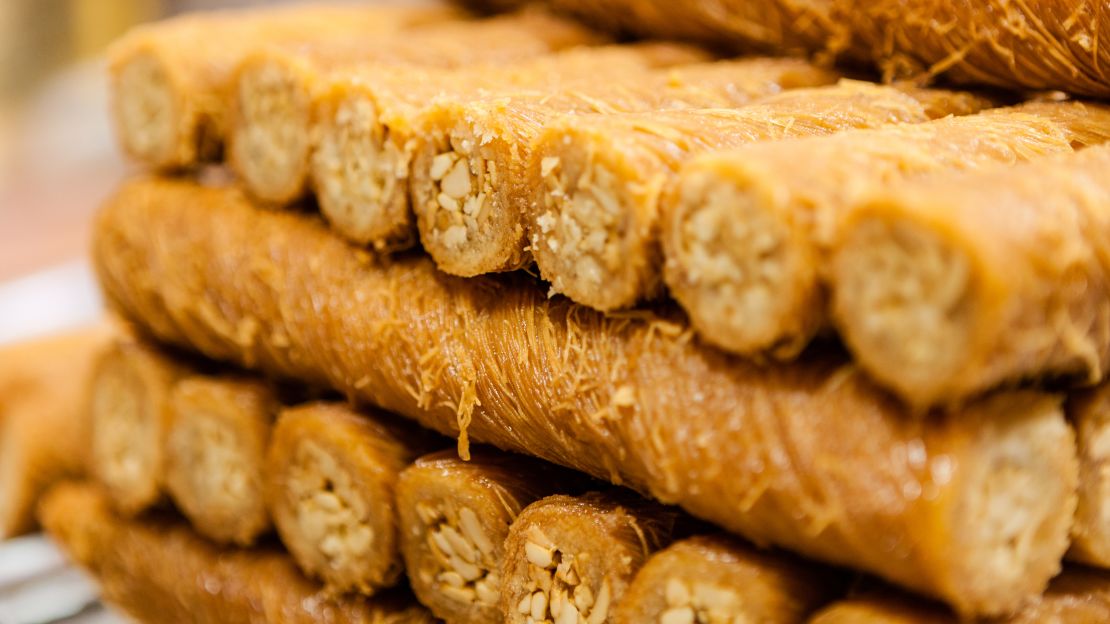
Traveling eastward, the sweets of the Middle East and North Africa reveal a symphony of textures, aromas, and rituals. Turkish baklava, for instance, layers flaky phyllo dough with crushed nuts and drenches it in rose or orange blossom-scented syrup. Its richness is unapologetic, designed to be savored slowly with strong black tea.
In Lebanon and Syria, maamoul cookies—stuffed with dates, pistachios, or walnuts—appear during Eid and other festivities. Their intricate moldings reflect the care with which they’re made, and their crumbly texture gives way to intense, spiced sweetness.
Moreover, Moroccan chebakia, deep-fried sesame cookies drenched in honey and sprinkled with cinnamon, are intricately braided and served during Ramadan. Additionally, Tunisian zgougou—a pine nut pudding garnished with almonds and pomegranate—is both nourishing and opulent.
Across this region, spices such as cardamom, mahleb, and mastic elevate sugar to something sacred. Each bite is lush, perfumed, and designed to awaken all the senses. Without question, these are truly sweet world treats woven into the fabric of hospitality and faith.
South Asian Decadence: Dense, Sweet, and Ceremonial
South Asia approaches dessert with unabashed indulgence and reverence. Whether it’s a temple offering or part of a wedding feast, sweets in India, Pakistan, and Bangladesh play an integral role in both celebrations and daily life.
One of the most iconic offerings is gulab jamun—deep-fried milk dough balls soaked in saffron-cardamom syrup. Their syrupy softness and caramelized flavor embody warmth in both taste and sentiment. Then there’s jalebi, a swirl of fermented batter fried and soaked in bright orange syrup. Its crunch and tangy sweetness make it a festival essential.
In Bengal, rosogolla—spongy cheese balls floating in light syrup—is a dessert that sparks passionate regional pride. Meanwhile, kaju katli, a cashew fudge cut into diamond shapes, demonstrates the minimalist elegance of just a few ingredients transformed by expert hands.
Even daily staples like halwa, whether made from semolina, carrot, or lentils, showcase the region’s ability to build flavor through slow cooking and aromatic layering.
Clearly, these South Asian desserts are not just snacks—they are sacred gestures. Every offering from this region earns its place among iconic sweet world treats.
East Asia’s Elegant Minimalism: Subtlety, Form, and Texture
In contrast to the syrup-heavy decadence of other regions, East Asia’s sweet offerings lean into subtlety and texture. Japan’s wagashi, traditional confections served with tea, are edible art. Made from rice flour, beans, and fruits, they are as visually stunning as they are gentle in flavor.
Additionally, mochi—the chewy rice cake—is both a New Year’s delicacy and a contemporary global favorite. China’s tangyuan—glutinous rice balls filled with sesame paste and served in ginger syrup—symbolize unity and are traditionally eaten during the Lantern Festival.
Moreover, mooncakes, with dense lotus seed or red bean paste and salted egg yolk centers, are central to the Mid-Autumn Festival. They represent reunion, gratitude, and the passing of seasons.
Meanwhile, Korea’s yakgwa, a deep-fried honey cookie perfumed with ginger and sesame oil, blends the ancient and the divine. Often served at weddings or ancestral rites, it exemplifies the spiritual layer embedded in sweets.
Thus, these desserts demonstrate that sweetness need not be loud to be memorable. Their understated elegance secures their place among the most refined sweet world treats.
Southeast Asia’s Tropical Twist: Color, Coconut, and Cool Relief
In the sweltering climates of Southeast Asia, desserts serve dual roles: as sweetness and as refreshment. Ingredients like pandan, coconut, palm sugar, and tropical fruits bring flair and vibrancy to the table.
For example, in the Philippines, halo-halo is a technicolor mountain of shaved ice layered with sweet beans, leche flan, coconut jelly, jackfruit, and ube (purple yam). Despite the chaos, each component contributes to a unified, joyful experience.
Thailand’s mango sticky rice, drizzled with salted coconut cream, is a summer must-have. Its blend of richness and freshness creates a tropical balance few can resist. In Vietnam, chè, a category of sweet soups or puddings, can include everything from lotus seeds to mung beans, layered with ice or warm coconut milk.
Indonesia offers klepon, glutinous rice balls filled with palm sugar and rolled in coconut. Notably, they burst with syrup when bitten, leaving behind a trail of rich, earthy satisfaction.
All in all, these sweet world treats echo the environment—lush, vibrant, and packed with contrast.
African Delicacies: Bold, Local, and Deeply Cultural
Although often underrepresented on global dessert menus, African nations offer extraordinary sweets deeply rooted in local ingredients and ancestral customs.
In West Africa, chin chin—small fried dough cubes—are crisp, buttery, and dusted with sugar. Sold in plastic bags on street corners, they are as ubiquitous as they are beloved. Kelewele, while technically a spicy plantain snack, bridges the gap between sweet and savory with its sugar and chili coating.
Moreover, North Africa leans heavily into nut-based sweets. Algerian makroud, semolina pastries filled with dates and soaked in honey, are rich with Maghrebi flair. In Ethiopia, dabo kolo—tiny toasted grain snacks coated in sugar and spices—are served with coffee and heartfelt conversation.
Without a doubt, these desserts may not dominate patisserie windows, yet their cultural resonance is immense. They deserve to be counted among the globe’s essential sweet world treats.
Latin American Indulgence: Caramel, Custard, and Cinnamon
In Latin America, desserts are soulful, caramelized, and steeped in colonial and indigenous influence. Dulce de leche appears across borders—from Argentina’s alfajores to Mexican cajeta made from goat’s milk. This golden caramel is a regional emblem of warmth and nostalgia.
Brazil’s brigadeiros, made from condensed milk, cocoa, and butter, rolled in sprinkles, are a mainstay of children’s parties and holiday feasts. They’re sticky, chocolatey, and endlessly customizable.
Peru’s suspiro de limeña, a layered dessert with manjar blanco and meringue, evokes the romance of its namesake, “the sigh of a woman from Lima.” Additionally, churros, flan, and arroz con leche (rice pudding) round out the region’s confectionary repertoire.
Whether spiced, soaked, or sprinkled, these sweet world treats offer unapologetic joy with every bite.
North American Classics: Nostalgia and Invention
North America’s dessert culture is a collision of immigration, innovation, and industrial convenience. Classic American pies—apple, pecan, key lime—carry regional significance, telling stories of harvests and hometown pride. Brownies, cookies, and donuts, while seemingly simple, hold emotional weight and embody comfort.
The Southern U.S. offers sweet potato pie, peach cobbler, and banana pudding, desserts tied to generational identity. Meanwhile, Canada’s Québec region delivers butter tarts, with gooey centers and flaky shells that reflect British ancestry and northern adaptation.
From New York-style cheesecake to s’mores by the campfire, these sweet world treats often blur the line between tradition and reinvention.
The Universal Language of Sweetness
No matter where you land on the globe, sweetness speaks fluently. Whether it’s a grandmother dusting powdered sugar over a cake, a street vendor flipping sugary crepes at dawn, or a temple priest placing sacred halwa on a silver plate, sweetness links the mundane and the divine.
Indeed, desserts across cultures are not solely about indulgence—they are about time, place, memory, and meaning. While ingredients and forms differ, the human need to punctuate life with something sweet remains universal.
Across every region, sweet world treats act as edible souvenirs of who we are, where we come from, and what we celebrate. They remind us that amid complexity, there is always room for delight.