

The Art of Precision in Culinary Craft in the vast and flavorful world of gastronomy, technique alone is not enough. Creativity may spark innovation, and instinct may drive improvisation, but what truly defines culinary mastery is precision in craft. From the angle of a knife blade slicing into a tomato to the calibrated seconds of resting time after grilling a steak, every gesture matters. In fine cooking, precision is not simply about control—it’s about respect for the ingredient, reverence for the process, and the pursuit of culinary clarity.
The Hidden Geometry of the Kitchen
A professional kitchen is not unlike a laboratory. Measurements are exact, environments are controlled, and actions are repeatable. Behind the apparent chaos of sizzling pans and shouting chefs lies a strict choreography. Every movement is purposeful, every cut deliberate.
For instance, consider knife work. The difference between a julienne, brunoise, and chiffonade may seem minute to the untrained eye, yet these distinctions affect texture, cooking time, and flavor distribution. The way an onion is sliced changes how its sugars caramelize. The thickness of a vegetable determines whether it wilts or holds its structure under heat.
Thus, precision in craft becomes the underlying grammar of culinary language—subtle, disciplined, and foundational.
Balancing the Five Pillars of Flavor
Taste is not a wild guess. In refined cuisine, the interplay of sweet, salty, sour, bitter, and umami is engineered with meticulous attention. Each component is weighed against the others to create a seamless harmony.
In Thai cuisine, for example, the dynamic balance of lime juice, fish sauce, chili, sugar, and herbs isn’t accidental. It results from centuries of refining recipes until each bite resonates with complexity. A drop too much of one element, and the entire equilibrium collapses.
Similarly, French sauces demand precision in reduction times, fat ratios, and emulsification. The silky gloss of a perfect beurre blanc or velouté is the product of timing, temperature, and unbroken focus.
In these cases, precision in craft ensures not just flavor but integrity—each ingredient expressing its fullest potential in relation to the whole.
Time as a Culinary Ingredient
Time, in the culinary arts, is more than a duration—it is a seasoning, a silent collaborator, a transformative force.
Fermentation, braising, dry-aging, and marinating all hinge on temporal accuracy. Let a kimchi ferment too long and it becomes overly sour; rush a confit and the texture suffers. The difference between underproofed and overproofed dough lies in mere minutes but spells the fate of an entire loaf.
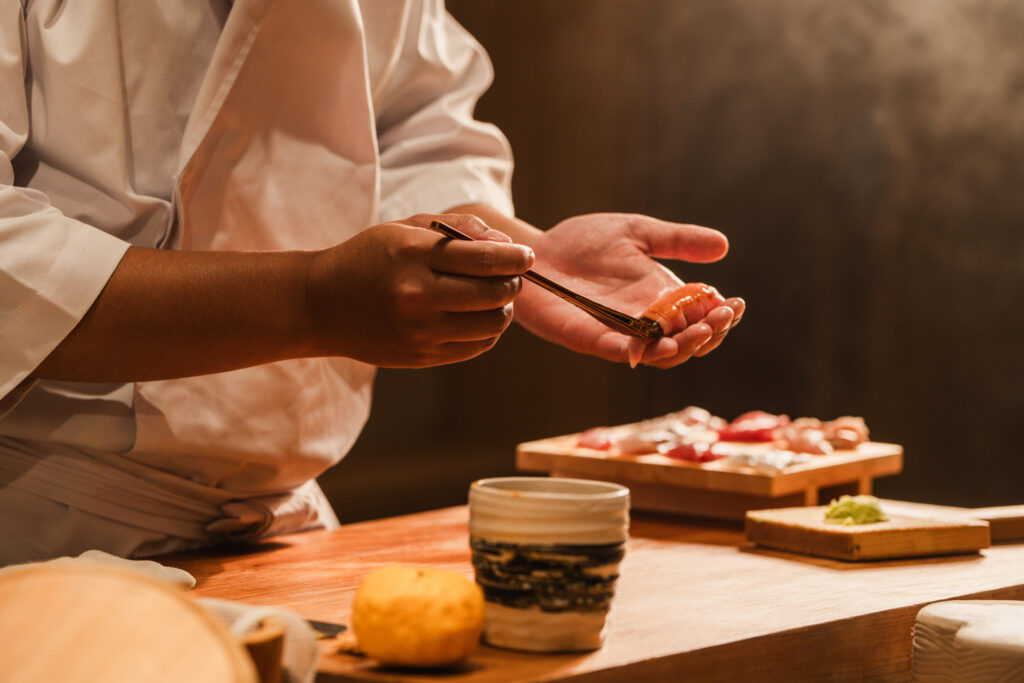
In sushi preparation, rice is cooled to exact temperatures before being molded. The timing of how long a piece of fish is seared for aburi-style nigiri is measured in heartbeats.
Therefore, precision in craft is not simply a matter of doing—it is a matter of when, and for how long, and with what consequence.
Heat: Mastering the Invisible Variable
Heat is invisible, yet its impact is unmistakable. It’s one of the most volatile and misunderstood variables in cooking, and mastering it requires acute perception.
There’s a significant difference between sautéing and sweating vegetables. One requires high heat for color and flavor; the other demands gentle warmth to coax out moisture without browning. A few degrees can mean the difference between a perfect caramel and a bitter one.
Grill marks on a steak are not purely aesthetic—they are signs of the Maillard reaction, the magical browning that unlocks umami and complexity. This chemical reaction only occurs within a narrow band of temperature, requiring sharp attentiveness.
When it comes to baking, ovens must be preheated with consistency, and internal temperatures monitored with thermometers, not guesswork. Soufflés, croissants, and macarons are unforgiving to thermal imprecision.
Heat, then, becomes a scalpel in the hands of the skilled—one more place where precision in craft distinguishes art from approximation.
The Ritual of Mise en Place
Mise en place—literally, “everything in its place”—is more than just a logistical tactic. It is a philosophical approach to cooking that emphasizes order, mental readiness, and intentionality. Chefs prepare every ingredient before cooking begins, ensuring they can move through each step fluidly and efficiently.
This discipline extends beyond organization. It cultivates focus, reduces errors, and allows chefs to devote full attention to cooking itself. A clean, well-arranged station is not about aesthetics—it is about precision.
In the military-grade efficiency of a Michelin-starred kitchen, precision in craft begins long before the flame is lit or the plate is assembled. It begins with knowing exactly where the salt lies and how many grams are required.
Plating as Architectural Expression
Visual presentation is often dismissed as ornamental. Yet plating, at its core, is about structure, flow, and intention. It guides the diner’s experience—what hits the tongue first, how bites evolve, where textures collide or contrast.
Precision here means arranging elements in proportion and purpose. Negative space is not emptiness but a deliberate pause, a canvas that amplifies what is present. The arc of a puree, the stack of a protein, the crumble of garnish—all contribute to visual rhythm.
Modern plating, particularly in fine dining, incorporates geometry, symmetry, and abstraction. Lines are drawn with tweezers, sauces dotted with pipettes. These details may seem extreme, but they reflect an unrelenting commitment to precision in craft, elevating the act of nourishment to aesthetic ceremony.
Sensory Calibration and Consistency
Professional kitchens are obsessed with consistency. A guest ordering the same dish on two separate nights expects—and deserves—identical satisfaction.
To achieve this, chefs must develop highly calibrated sensory awareness. They train their palates to detect minute variations in seasoning, acidity, or doneness. They rely on more than just timers; they listen to the sizzle of oil, watch for micro-changes in texture, feel the tension of dough beneath their fingertips.
Moreover, recipes in such kitchens are more akin to formulas. Every gram, every second, every stir is noted and rehearsed until muscle memory takes over.
This pursuit of replicability is a cornerstone of precision in craft. It ensures not only excellence, but reliability—and in doing so, it builds trust.
Molecular Gastronomy and Culinary Science
At the frontier of modern cuisine, molecular gastronomy showcases precision in its most literal form. Here, chefs use centrifuges, liquid nitrogen, and emulsifiers not just to transform texture but to alter perceptions of flavor itself.
Spherification turns olive juice into pearls. Agar-agar solidifies consommé into bite-sized orbs. Sous vide cooking involves vacuum-sealing ingredients and heating them at exact temperatures for controlled durations—delivering perfect doneness, every time.
These tools require scientific accuracy, but their value lies in intention. They do not replace traditional skill—they amplify it. Without precision in craft, the results would be gimmicky. With it, they become revelatory.
The Cultural Roots of Culinary Precision
While fine dining often steals the spotlight, many traditional cuisines have long practiced exacting methods. Japanese tea ceremonies, Indian tandoori techniques, French pâtisserie, and Chinese dim sum all rely on rigor.
In Moroccan kitchens, spice blends are measured by sight and smell but passed down with such care that proportions are honored to the gram. In Vietnamese pho, broth clarity and spice steeping are orchestrated with patience and precision.
So, precision in craft isn’t a new idea—it’s a global inheritance, dressed in different languages but sung in the same key.
Emotional and Ethical Dimensions
Precision isn’t merely technical. It’s also emotional. When a chef fillets a fish with minimal waste, tempers chocolate without bloom, or respects religious dietary laws with careful handling, they’re not just following a method—they’re honoring values.
Ethical sourcing, zero-waste cooking, and transparent labeling are contemporary reflections of precision. They demonstrate accountability in every layer of the culinary process, from farm to fork.
In this context, precision in craft becomes an ethical stance. It expresses care—not only for the dish but for the ecosystem that made the dish possible.
The kitchen, at its highest form, is a space where instinct dances with accuracy. Behind every astonishing meal is an unseen web of decisions made with mathematical care and poetic finesse.
While chaos may produce novelty, it is precision in craft that elevates cuisine to artistry. It is the quiet discipline, the tireless repetition, the reverent detail that gives a dish its soul.
In the end, the art of precision is not about rigidity—it is about honoring the journey from raw ingredient to sublime experience, one meticulous moment at a time.