

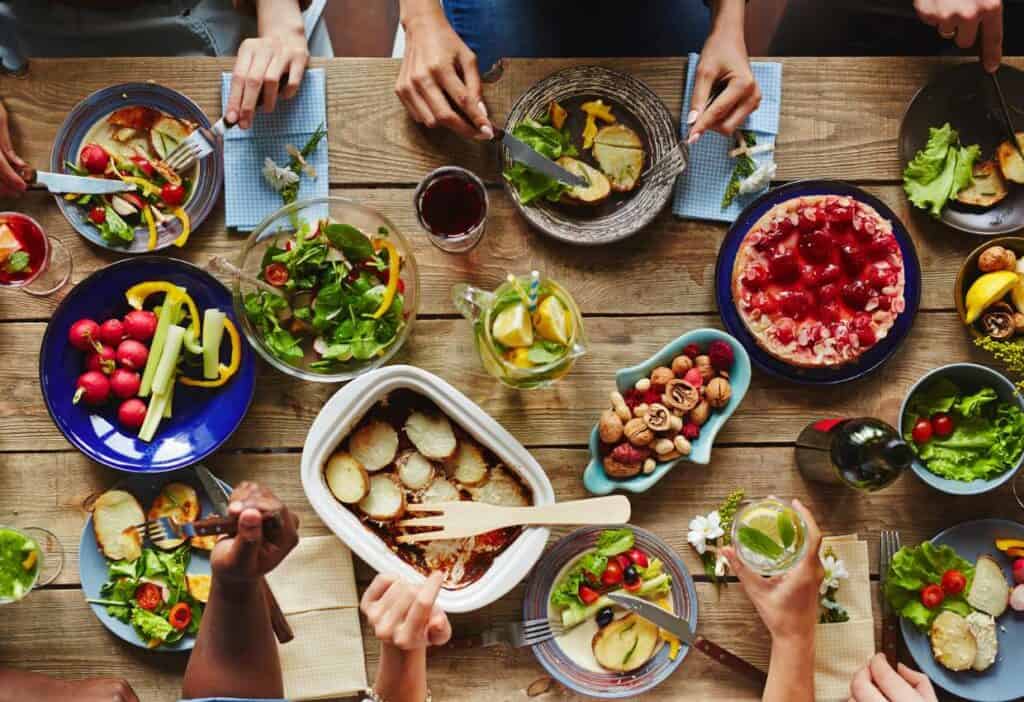
Around the Table With World Cuisine food unites in a way few things do. It transcends borders, dissolves language barriers, and sits proudly as the centerpiece of human connection. Across continents, cultures gather around meals not merely to eat, but to converse, to celebrate, to heal, and to remember. Sitting around the table is a ritual that binds generations, an act rich with texture and narrative. In this sprawling mosaic of global gastronomy, one discovers a table of flavors—a sensory feast shaped by geography, history, and memory.
Bread and Belonging: The Universal Staple
Across the globe, bread appears as the quiet companion to countless meals. In France, the crusty baguette is revered with near-spiritual reverence. Meanwhile, in the Middle East, pita rounds puff up like golden pillows, ready to cradle herbs and spiced meats. Ethiopia offers injera—a tangy, porous canvas for stews and lentils.
Though its forms vary wildly, bread consistently invites sharing. It is torn, passed, and dipped communally. Often, breaking bread signifies hospitality, trust, and humility. As a result, it becomes the cornerstone of any authentic table of flavors, reminding diners that simplicity can be profoundly sacred.
Soups: Spoons That Stir Culture
A ladle of soup can hold centuries of history. In Eastern Europe, borscht blushes with beetroot, cream, and folklore. Across Japan, miso soup appears as a delicate harmony of dashi, tofu, and seaweed—unassuming yet essential. Further south, Thai tom kha warms the soul with its mix of coconut milk, galangal, and lemongrass.
Not only do these broths nourish the body, but they also speak of climate, agriculture, and ancestral survival. Slurped in silence or spooned with laughter, soups anchor the global table of flavors, offering warmth beyond temperature—comfort through connection.
Curries: Complexity in Every Spoonful
Few culinary categories rival the aromatic intensity of curry. It’s a universe within itself. In India, each region carves its identity into curries—Keralan coconut gravies, Rajasthani fiery red sauces, Punjabi butter-soaked blends. In Thailand, curries take on brighter notes—green, red, and yellow—each speaking a different dialect of spice.
Meanwhile, Japan presents a milder, stew-like version, often paired with katsu or rice. In Jamaica, curry takes on boldness with goat meat and Scotch bonnet heat. Regardless of origin, curries reflect resourcefulness, migration, and flavor engineering. Therefore, they sit proudly at the heart of the table of flavors, rich in nuance and soul.
Dumplings: Universality Wrapped in Dough
Few dishes are as globally omnipresent—and beloved—as the humble dumpling. In China, jiaozi are pinched and steamed with precision. Italy offers ravioli, delicate pillows stuffed with cheese, herbs, or meats. Poland’s pierogi delight with potato and onion. In Latin America, empanadas encase spicy fillings in golden pastry shells.
Though the wrappings and fillings change, the essence remains consistent: comfort, portability, and heart. As a result, dumplings serve as edible heirlooms, often handmade during festivals or family gatherings. At every table of flavors, they speak softly but universally of home and heritage.
Grains and Growth: The Quiet Pillars of Civilization
While vibrant dishes steal the spotlight, grains often play the stoic supporting role. Yet rice, millet, quinoa, and couscous tell stories of agriculture, trade, and innovation. In Japan, short-grain rice is treated almost ceremonially. Likewise, Morocco’s couscous is steamed thrice and fluffed to perfection. In South America, quinoa—a sacred Incan crop—anchors meals with nutty resilience.
Grains are often the canvas upon which bold flavors are painted. They stabilize the table of flavors, offering texture and nutritional balance. Moreover, their cultivation represents a deep symbiosis between land and people.
Street Food: The Pulse of the People
Street food captures a culture’s raw, unfiltered identity. It’s fast, flavorful, and profoundly local. In Mexico, tacos al pastor sizzle on rotating spits, layered with pineapple sweetness and chili heat. Bangkok’s streets are lined with skewers of grilled satay, steaming bowls of pad Thai, and ice-cold cha yen.
From the bao carts of Taipei to the bratwurst stalls of Berlin, street food pulses with energy and ingenuity. These dishes often reflect necessity turned into artistry. Consequently, no curated table of flavors is complete without acknowledging the humble brilliance found on sidewalks and street corners.
Salads: Where Freshness Becomes Philosophy
Across regions, salads embody seasonal wisdom and raw creativity. Lebanese tabbouleh bursts with parsley and citrus, offering a verdant respite from heavier fare. In Italy, caprese celebrates simplicity—mozzarella, basil, tomato, and olive oil in minimalist harmony. Additionally, Thai papaya salad (som tam) slaps the senses awake with chili, lime, and fermented fish sauce.
Far from being side dishes, many global salads are cultural centerpieces. They embody balance, timing, and restraint. Therefore, they play a vital role in the table of flavors, offering vibrancy and clarity between richer courses.
Meat and Fire: The Ritual of Roasting
Roasting meat has always been more than cooking—it’s a ceremony. In Argentina, asado is a national rite. Firewood, metal grills, and patience transform beef cuts into smoky poetry. In the Middle East, lamb is spiced, skewered, and slow-roasted over embers during communal feasts. Meanwhile, the American South offers slow-smoked barbecue, deeply regional and fiercely defended.
These dishes are about timing, trust, and tending to flame. Often, they’re shared during important gatherings—weddings, festivals, religious observances. They ignite the table of flavors with primal satisfaction and ancestral technique.
Sweet Closures: Desserts as Legacy
Desserts seal the story of a meal. In France, macarons crunch and melt in tandem, while crème brûlée cracks with caramel confidence. Turkish baklava layers pistachios and syrup into crystalline pleasure. Indian gulab jamun, soaked in rose-scented syrup, brings syrupy nostalgia.
These confections aren’t mere afterthoughts. Instead, they reflect opulence, festivity, and often, sacred ritual. Whether shaped by fasting traditions, harvests, or celebration, desserts bring softness and conclusion to the table of flavors, wrapping the meal in indulgent punctuation.
Beverages: Liquid Echoes of Culture
Drinks are more than refreshments—they’re cultural signatures. Argentina sips mate from communal gourds, passing it clockwise in intimate circles. In Turkey, tea is served in tulip-shaped glasses, often sweetened to complement long conversations. In India, chai is steeped with spices and nostalgia, boiling over both literally and figuratively in roadside stalls.
Even alcoholic traditions carry depth—sake in Japan, ouzo in Greece, tequila in Mexico—all rooted in spiritual or social ceremonies. Thus, these beverages enliven the table of flavors, acting as bridges between plates and people.
The Role of Ritual: Setting the Table With Intention
Setting the table is not a neutral act. It involves symbols, etiquette, and care. In Japan, the placement of chopsticks holds spiritual meaning. In Ethiopia, meals begin with handwashing and end with coffee ceremonies. Similarly, in France, cutlery order signals formality and respect. Each gesture—pouring wine, lighting candles, folding napkins—adds texture to the experience.
These rituals frame the table of flavors with meaning beyond taste. They remind us that how we eat is as important as what we eat.
Fusion Feasts: The Birth of New Traditions
Globalization has transformed the culinary landscape, for better and worse. Yet it has also birthed fascinating hybrids. Korean tacos. Sushi burritos. Indian pizza with paneer tikka. These creations, sometimes controversial, reflect cultural collisions and diasporic innovation.
Though purists may scoff, fusion cuisine often carries its own legitimacy. It arises from migration, adaptation, and youthful experimentation. As a result, the modern table of flavors is not static—it evolves, absorbs, and reinvents.
Celebration and Ceremony: Food as Emotional Architecture
Food takes on special gravitas during life events. From Jewish Shabbat dinners to Chinese New Year banquets, from Ramadan iftars to Christmas feasts—meals shape the emotional scaffolding of our biggest moments.
Roasts, rice cakes, breads braided with intention—these aren’t just about sustenance. Rather, they are edible declarations of gratitude, hope, and remembrance. Every celebratory table of flavors tells a story not only of culture but also of collective emotion.
Silence, Laughter, and the Space Between Bites
What happens between the bites matters just as much. The pauses. The eye contact. The laughter. The shared glances when a dish hits the perfect note. Around the world, mealtime conversation is fluid—sometimes lively, sometimes reverent.
Food doesn’t demand constant dialogue. Nevertheless, a silent nod across a table of flavors can say more than words ever could. It’s a language of satisfaction, a dialogue made entirely of sensation and presence.
World cuisine isn’t just about recipes—it’s about ritual, symbolism, and shared human experience. Each culture brings a unique set of tools to the table: spices, preparation methods, culinary philosophies, and etiquette. Together, these elements form an intricate table of flavors, one that invites curiosity, empathy, and communion.
To eat globally is not merely to taste, but to understand. Around the table, we find more than food—we find connection. In every mouthful, there’s a map. And in every meal, a mirror.